

- October 5, 2026
- Posted by: Pappun D
- Category: Stroke
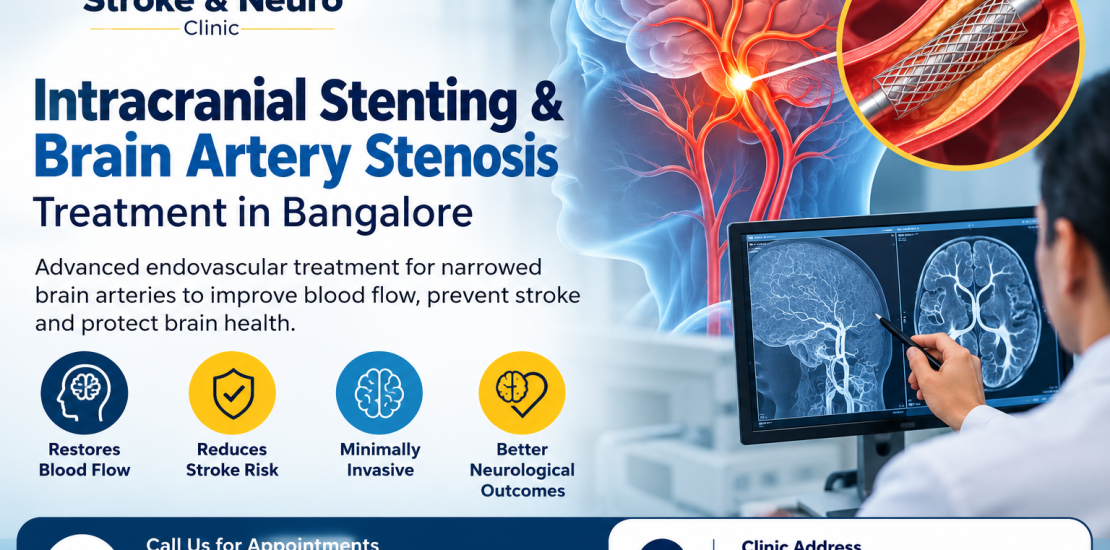
Intracranial stenting specialists in Bangalore can help evaluate patients with narrowing or blockage of arteries inside the brain. Intracranial artery stenosis can reduce blood flow to the brain and may increase the risk of transient ischemic attack (TIA) or ischemic stroke.
At the Stroke and Neuro Clinic, Dr. Vikram Huded is an Interventional Neurologist and Stroke Specialist with expertise in neurovascular and endovascular procedures. The clinic’s website lists carotid and intracranial stenting among the procedures performed. (Stroke and Neuro Clinic)
What Is Brain Artery Stenosis?
Brain artery stenosis refers to narrowing of an artery that supplies blood to the brain. When an intracranial artery becomes narrowed, blood flow to parts of the brain may be reduced.
Depending on the severity and symptoms, treatment may involve medicines, management of stroke risk factors, monitoring, or an endovascular procedure such as angioplasty and stenting in selected patients.
What Causes Intracranial Artery Stenosis?
Possible contributing factors include:
- Atherosclerosis and plaque buildup
- High blood pressure
- Diabetes
- High cholesterol
- Smoking
- Previous stroke or TIA
- Other conditions affecting blood vessels
A neurologist or neurointervention specialist can assess the underlying cause and determine the appropriate treatment approach.
Best Doctor for Intracranial Stenting in Bangalore
When looking for a best doctor for intracranial stenting in Bangalore, patients should consider the specialist’s training in neurology and neurointervention, experience with neurovascular procedures, availability of appropriate imaging and endovascular facilities, and the individual’s specific medical condition.
Dr. Vikram Huded is an Interventional Neurologist and Stroke Specialist. His qualifications listed on the clinic website include MBBS, MD (General Medicine), DM (Neurology), FIN (KEM Hospital), and FWSO. He has completed a two-year fellowship in Neurointervention at KEM Hospital, Mumbai. (Stroke and Neuro Clinic)
The clinic states that Dr. Huded has performed more than 9,000 neurointerventional procedures and has experience in a range of neurovascular interventions. (Stroke and Neuro Clinic)
Intracranial Artery Stenting Doctor in Bangalore
An intracranial artery stenting doctor in Bangalore evaluates whether narrowing within a brain artery requires endovascular treatment.
The evaluation may include:
- Neurological examination
- Review of previous stroke or TIA symptoms
- MRI or CT brain imaging
- CT angiography or MR angiography
- Cerebral angiography when required
- Assessment of vascular risk factors
- Evaluation of previous medical treatment
Intracranial stenting is not appropriate for every patient with artery narrowing. Treatment decisions depend on factors such as symptoms, location and severity of stenosis, previous stroke or TIA, medical history, imaging findings, and response to medical management.
How Does Intracranial Stenting Work?
Intracranial stenting is an endovascular procedure. A catheter is guided through the blood vessels to the narrowed artery under imaging guidance.
Depending on the specific case, the specialist may use angioplasty and/or place a stent to help improve the channel through the narrowed artery.
The procedure is performed by a trained neurointervention team in an appropriate hospital setting.
Brain Artery Stent Specialist in Bangalore
A brain artery stent specialist in Bangalore manages selected cases of narrowing in blood vessels supplying the brain.
Intracranial stenting may be considered in carefully selected patients where the expected benefits of an endovascular approach outweigh its risks.
The Stroke and Neuro Clinic website lists intracranial stenting as one of Dr. Vikram Huded’s present neurointerventional procedures. (Stroke and Neuro Clinic)
Symptoms Associated With Brain Artery Stenosis
Intracranial artery narrowing may sometimes be discovered during evaluation after a TIA or stroke. Symptoms can include:
- Sudden weakness or numbness
- Difficulty speaking or understanding speech
- Sudden vision problems
- Facial weakness
- Dizziness or loss of balance
- Difficulty walking
- Sudden confusion
- Severe neurological symptoms
Sudden neurological symptoms can indicate a stroke and require immediate emergency medical attention rather than waiting for a routine consultation.
Intracranial Stenosis Treatment Doctor in Bangalore
An intracranial stenosis treatment doctor in Bangalore can assess the severity of narrowing and determine whether medical treatment, monitoring, or an endovascular procedure should be considered.
Treatment can involve:
Medical Management
Depending on the patient’s condition, doctors may recommend medications and management of risk factors such as:
- Blood pressure
- Diabetes
- Cholesterol
- Smoking
- Diet and lifestyle factors
Endovascular Treatment
In selected cases, procedures such as angioplasty and intracranial stenting may be considered.
The choice of treatment should be individualized after reviewing the patient’s clinical condition and brain and blood-vessel imaging.
Who May Need Intracranial Stenting?
Intracranial stenting is generally considered only for selected patients. A specialist may evaluate factors including:
- Symptomatic intracranial stenosis
- Severity and location of arterial narrowing
- Previous TIA or ischemic stroke
- Recurrent symptoms despite appropriate medical treatment
- Overall health and procedural risk
- Results of vascular imaging
A specialist evaluation is necessary before deciding whether stenting is appropriate.
Dr. Vikram Huded – Interventional Neurologist and Stroke Specialist
Dr. Vikram Huded is an Interventional Neurologist and Stroke Specialist based in Bangalore. The clinic website lists his qualifications as MD (General Medicine), DM (Neurology), FIN (KEM Hospital), and FWSO. He has completed specialized training in Neurointervention and has extensive experience in neurovascular procedures. (Stroke and Neuro Clinic)
His listed areas include:
- Interventional Neurology
- Stroke treatment
- Neurointervention
- Vascular Neurology
- Intracranial stenting
- Carotid stenting
- Mechanical thrombectomy
- Brain aneurysm procedures
- AVM and dural fistula embolisation
- Cerebral angiography
The clinic also states that Dr. Huded was the first neurointerventionist in India to perform a temporary endovascular bypass using a Solitaire stent in acute stroke and the first to use a stent retriever in a 6-year-old child in Asia. (Stroke and Neuro Clinic)
Stroke and Neuro Clinic in Bangalore
Clinic: Dr. Vikram Huded’s Stroke and Neuro Clinic
Address: Inside VAMA Clinic, No. 162, 1st Floor, 9th Main Road, Sector 6, HSR Layout, Bengaluru, Karnataka – 560102
Phone: +91 91104 89706
Email: drvikramhuded@gmail.com
The clinic website lists consultation timings at this location on Monday and Wednesday from 6:30 PM to 7:30 PM. (Stroke and Neuro Clinic)
Why Early Evaluation Matters for Brain Artery Stenosis
Brain artery narrowing can be associated with stroke risk, particularly when it causes symptoms. Early assessment allows a specialist to identify the location and severity of stenosis and develop an appropriate treatment plan.
If symptoms such as sudden facial drooping, arm or leg weakness, speech difficulty, sudden vision loss, or severe imbalance occur, seek emergency stroke care immediately.
Frequently Asked Questions About Intracranial Stenting
What is intracranial stenting?
Intracranial stenting is an endovascular procedure used in selected patients with significant narrowing of an artery inside the brain. A catheter-based approach is used to reach the affected blood vessel, and a stent may be placed to help maintain the vessel’s opening.
Who performs intracranial stenting?
Intracranial stenting is performed by trained neurointervention specialists using specialized imaging and catheter-based techniques. Dr. Vikram Huded’s clinic lists intracranial stenting among his neurointerventional procedures. (Stroke and Neuro Clinic)
What are the symptoms of intracranial artery stenosis?
Symptoms can include sudden weakness or numbness, speech difficulties, vision changes, dizziness, imbalance, or other symptoms associated with reduced blood flow to the brain. Sudden symptoms require emergency evaluation.
Is intracranial stenting suitable for everyone?
No. Intracranial stenting is not appropriate for every patient with brain artery stenosis. A specialist considers symptoms, severity and location of stenosis, imaging findings, medical history, previous stroke or TIA, and other factors before recommending treatment.
How is brain artery stenosis diagnosed?
Doctors may use neurological examination along with MRI, CT, CT angiography, MR angiography, or cerebral angiography depending on the patient’s condition.
Can medicines be used instead of stenting?
Depending on the patient’s condition, medical management and control of stroke risk factors may be part of treatment. Whether stenting is required is determined after specialist evaluation.
When should I consult an intracranial stenosis specialist?
You should seek specialist evaluation if you have been diagnosed with intracranial artery narrowing, experienced a TIA or ischemic stroke, or have imaging showing significant narrowing of a brain artery.
Where can I consult an intracranial stenting specialist in Bangalore?
Dr. Vikram Huded’s Stroke and Neuro Clinic is located inside VAMA Clinic, No. 162, 1st Floor, 9th Main Road, Sector 6, HSR Layout, Bengaluru – 560102. The listed contact number is +91 91104 89706. (Stroke and Neuro Clinic)
Conclusion
Intracranial artery stenosis requires careful neurological and vascular evaluation because treatment depends on the severity of narrowing, symptoms, imaging findings, and individual stroke risk. Intracranial stenting is an endovascular treatment option for selected patients.
For evaluation of intracranial artery stenosis, brain artery narrowing, and neurovascular conditions in Bangalore, patients can consult an experienced Interventional Neurologist such as Dr. Vikram Huded at Stroke and Neuro Clinic.